Tomorrow I am flying to India. That sounds so ridiculously simple, yet so ridiculously complicated! Not least since there is due to be deep snow in Sheffield tomorrow, but when I step off the plane, it will be a very pleasant 24 degrees and sunny.
I am part of a very exciting research project, a partnership between the School of Museum Studies in Leicester, and the National Museum Institute in Delhi, funded through the British Academy and British Council. The project is called Things Unbound: Engagements with Objects in India and the UK, and I have set up a project blog which details the processes, partnerships and learning along the way.
It’s very closely aligned with my own research and practice: we’ll be exploring how visitors engage with objects, emotionally, sensorially, and imaginatively (I think), as well as running some training workshops for museology academics and fellow PhD students to begin to cement a partnership between ourselves several other museum studies courses in India. So far, we actually have very little idea of what we will be doing. This terrifies the control freak in me. I have never been to India, so I am completely not prepared for the culture shock that will hit me, and because of the lack of detail about what we will be doing, and when, it still seems slightly surreal. An adventure, rather than a piece of work.
I can’t believe I will be there in 48 hours. I’m going to write on this blog, as well as the ‘official’ one. There are several things that I am really interested in, which are an aside from the main purpose of the project. Firstly, I am really looking forward to spending time with Sandra and Margarida, and getting to know them both in different capacities. I am also looking forward to meeting with our Indian colleagues, Manvi, Manjari, Moumita and Juha. I have a feeling that relationships between academics and students in India may be more formal than they are in the UK, so it will be interesting to see how we are viewed as PhD students. I am also concerned that some of the practices of object engagements which are second nature to me, might be viewed more sceptically by what may be a more traditional museology discipline in India. I am taking my green object box and all sorts of things to rummage about with. But who knows?
Aside from this, I am excited about the utterly different cultural immersion. Living in a place for three weeks, closely working with Indian colleagues is such a different experience than a holiday or travel might be. I can’t begin to imagine the feeling when I get off the plane (apart from exhaustion). Sensory overload I think. But what that looks/smells/sounds like, I really don’t know. And in relation to my theological work, I am really interested in the notion of permanence and impermanence and how that looks in relation to objects in museums, the access/conservation paradox and so on. If all is impermanent, then how does a museum function?
So anyway, back to some practical details. We’ll be staying at the stunning looking Lutyens Bungalow in Delhi for some days (with its lovely garden, and swimming pool), and will then be going to Jaipur for some more days, and then back to Delhi. But I don’t know when or how long for, or even where we are staying in Jaipur…
I think I need to get to grips with this totally different pace: whatever will be will be.
Proposals for things often take up a lot of time and energy. Sometimes they are successful. But sometimes they are not. I seem to have written rather a lot of them over the last few weeks: to present at conferences; to curate an exhibition; to work on a piece of freelance creative engagement work.
And then there are the proposals still on my ‘to do’ list. The competition, the application, the symposium, the essay for a publication.
I propose that I do this… We propose that we do this…
Yet despite the intention that I will do all of these things (for that is what a proposal is), their actuality, their future reality, is (actually) completely out of my hands. If these proposals are not accepted for whatever reason, then they are not actual, and I wonder then, whether then they are even potentialities? Will I still do these things? Which ones can I still do, even in the face of rejection by another? Can I do any of them?
At what stage do we let go of our ideas, consign the possibilities to the bin and move onto the next thing? Perhaps we don’t. I’m not sure why I am mulling these things over. Perhaps there are bigger questions here about freedom, responsibility, choice… Are we all ultimately beholden to the puppeteer who pulls on the strings?
I thought I would write a little review of all the things I have been to in this year’s brilliant Festival of the Mind, organised by the University of Sheffield.
Sounds of the Cosmos. This event, like other events organised by Stewart Campbell, was creative, inspired, with unusual collaborations and innovative formats. In fact, it was a fabulous opening to my Festival of the Mind, as it really did totally blow my mind. Holst’s Planets Suite, played by the Sheffield Rep Orchestra, was interspersed with talks by Professor Paul Crowther from the Department of Physics and Astronomy and the most fabulous visuals provided by all sorts of incredibly clever telescopes and other gadgets at NASA and other organisations. Accessible, but impossible to grasp (that’s a compliment), it did leave me feeling very perplexed. About the insignificance of it all. Not just that we are so ridiculously tiny, but also that the task of astrophysics is doomed as well. I wonder why a physicist doesn’t accept that we will never know (like I think a theologian does – or certainly like the sort of theologian I admire might do) and live happily with this unknowing, rather than keeping on developing a failed and impossible sort of knowing… What really is the point of it all?
So I suppose I couldn’t have had a better start to a festival which celebrates wondering and interdisciplinary thinking and engagement with the public. The matinee, a later add on after the evening sold out, was geared towards schoolchildren – which although a brilliant thing to do – did mean that it was quite a noisy and disruptive environment. I hope it blew some of their minds: we’ll never know…
The next thing I went to (on Tuesday afternoon) was a series of exhibitions at the amazing almost derelict Castle House, home to the former Coop which was still in existence when I first moved to Sheffield in 2005. There were many things in here that I loved. I found the exhibition about the history of the building fascinating. I loved Shaun Bloodworth’s ‘Save the Birds’ collaboration with Tim Birkhead to create films and soundtracks of the dawn chorus, sadly now much changed due to bird numbers decreasing.
Shaun Bloodworth and Tim Birkhead
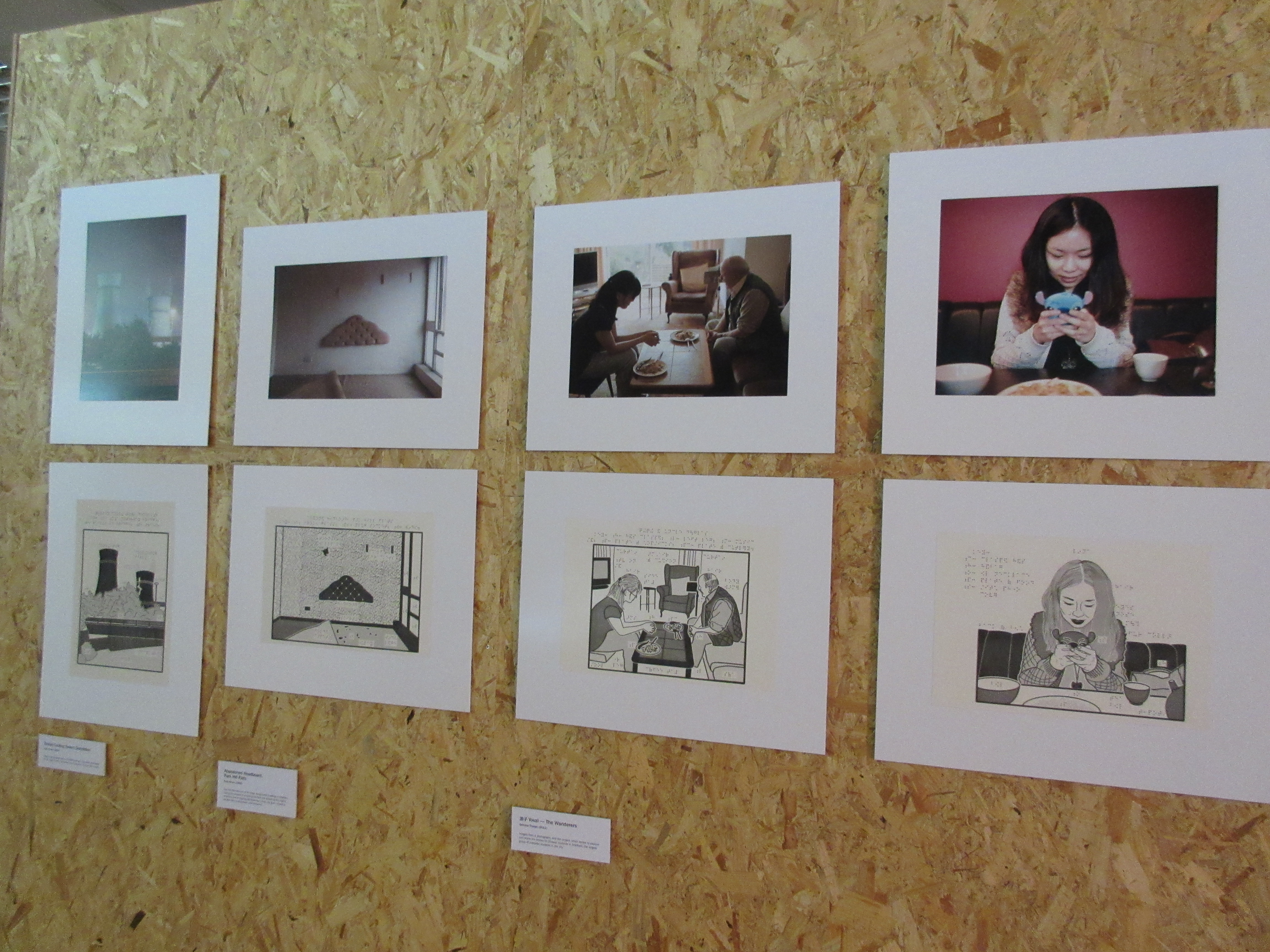
I loved learning about the many languages spoken in Sheffield, the strange gaze-shift installation which shows what the brain does when it looks at shapes, some imagined castles created by school children, and a weird illuminous nerve tent. A real highlight for me as someone interested in sensory engagements with things, was the Tactile Image exhibition by Clive Egginton, a film-maker who lost his sight earlier this year on being diagnosed with brain cancer. Photographs of Sheffield people, and Sheffield things by both him and a few others, were fabulous and thought-provoking in their own right, but when paired with tactile versions, the effect was wonderful. Raised images also incorporating descriptive text in Braille tied in so well with an excellent event I had been to the day before at Kelham Island Museum, celebrating their ‘Access all Areas’ project, in which Patricia Dieng’s TacMaps were particularly exciting to discover. And also reminded me of a project I did at Kettle’s Yard back in 2001, making ‘In To Touch’ packs for visually impaired people which were raised heated polystyrene precursors to all these things. Everything is interconnected.
The Tactile Image
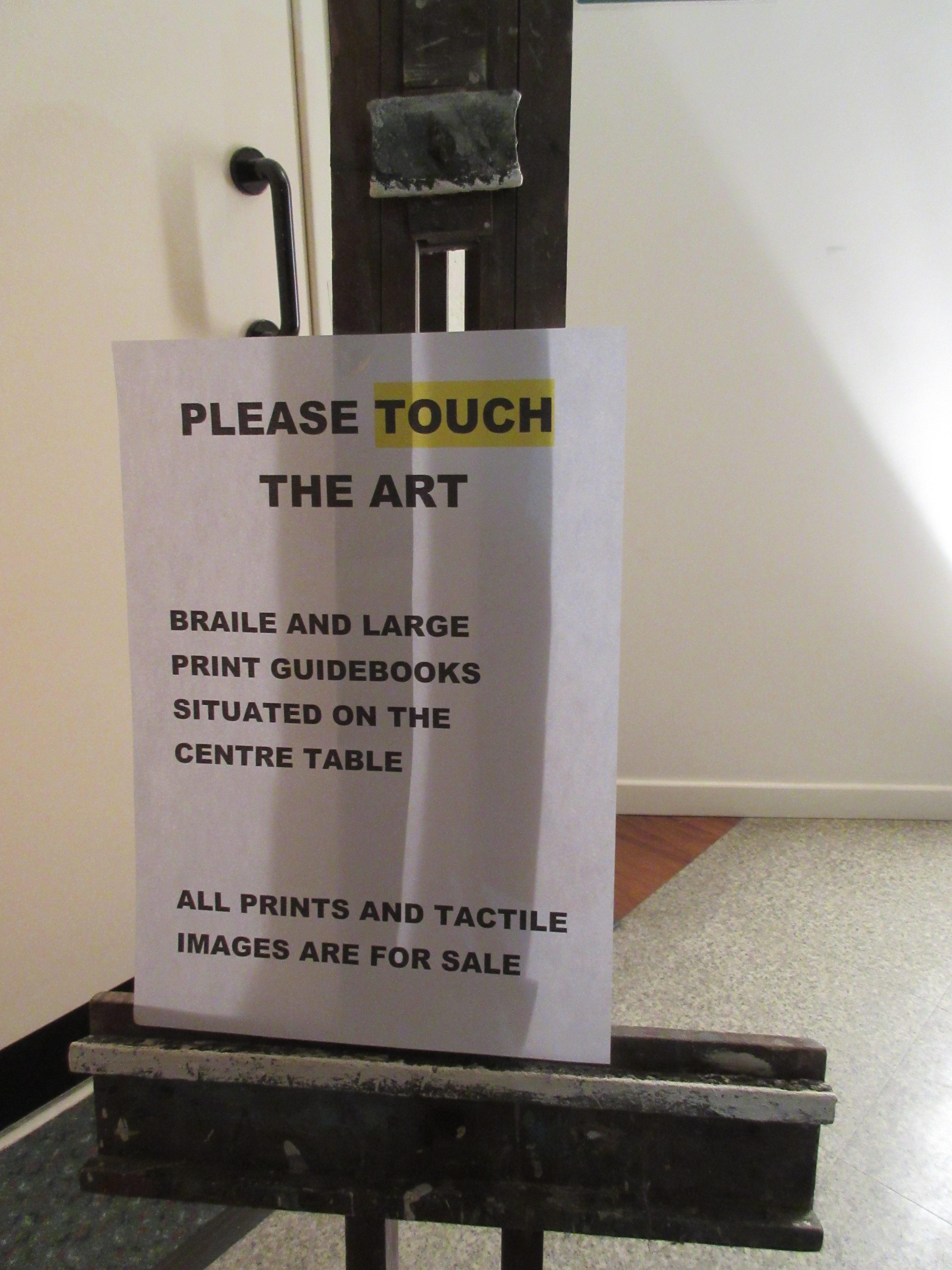
Please Touch
Other projects I found fascinating were the immersive soundscapes for people with dementia by composers ‘In the Nursery’, some of which were really soothing. It was also fascinating to see the thermal images of some of Sheffield’s iconic buildings.
Thermal imaging
I absolutely love love love the Letters to Sheffield project, and although I was sad not to see mine when I first went to Castle House, this has since been sorted out by way of a few tweets to the lovely people at Our Favourite Places and at Site who found my missing letter and have now installed it into the exhibition. I spent ages when I went back the second time reading these: funny, sad, poignant, apart from the one which declares Sheffield to be ‘crap, crap, crap’ (!), they almost all reveal a deep love of the city and a real sense of pride of place. We are so lucky to live here. The accompanying book is beautiful and something that every Sheffield person will love.
My letter to Sheffield
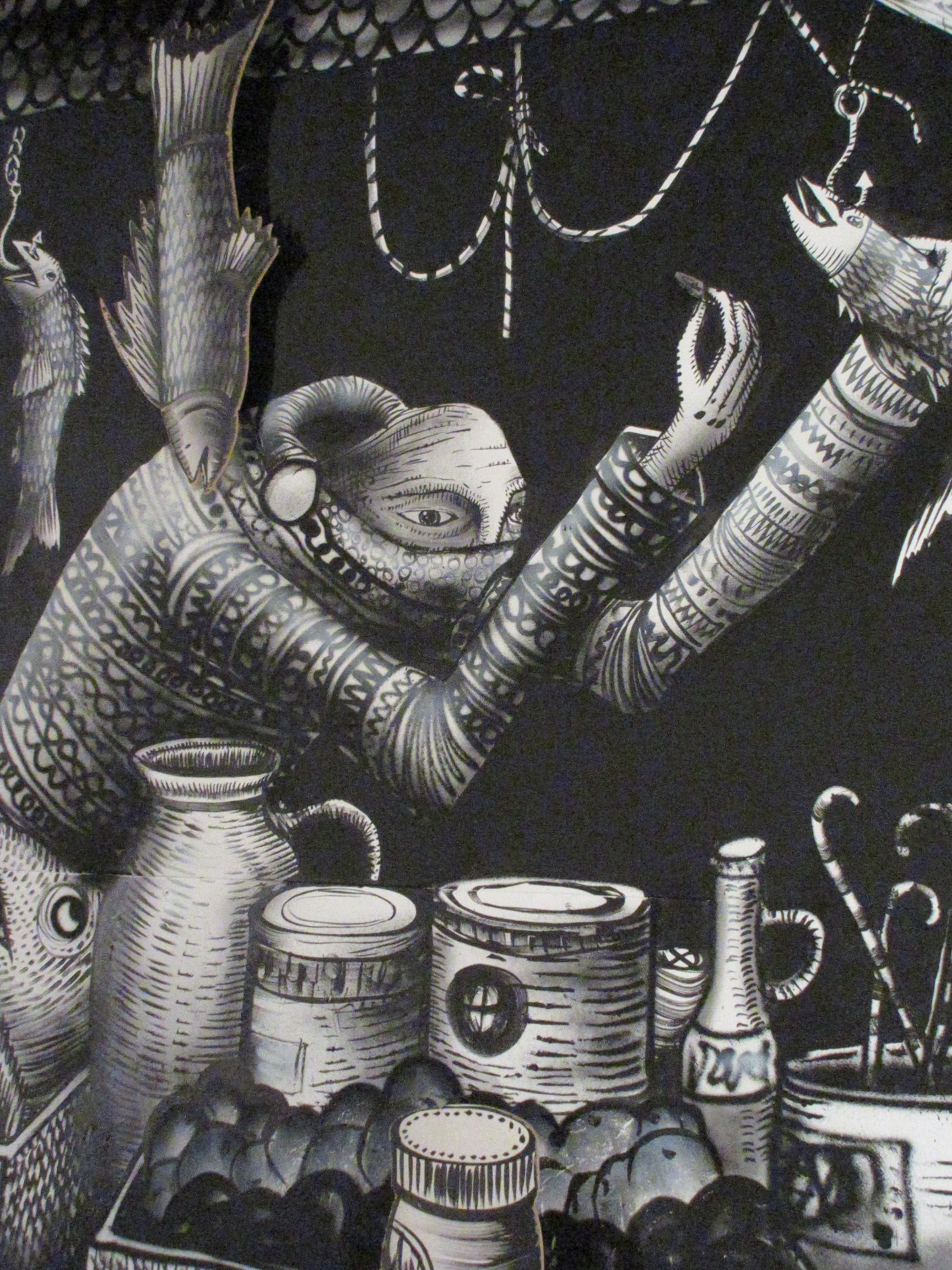
Phlegm’s marketplace piece in the Sheffield Bazaar artists’ interventions section downstairs was fantastic – especially amusing to have the old haberdashery sign showing through. In fact I loved this about the whole building, which even though only closed for less than 10 years, seemed so much more ancient, forlorn and forgotten.
Phlegm market
Fishmonger
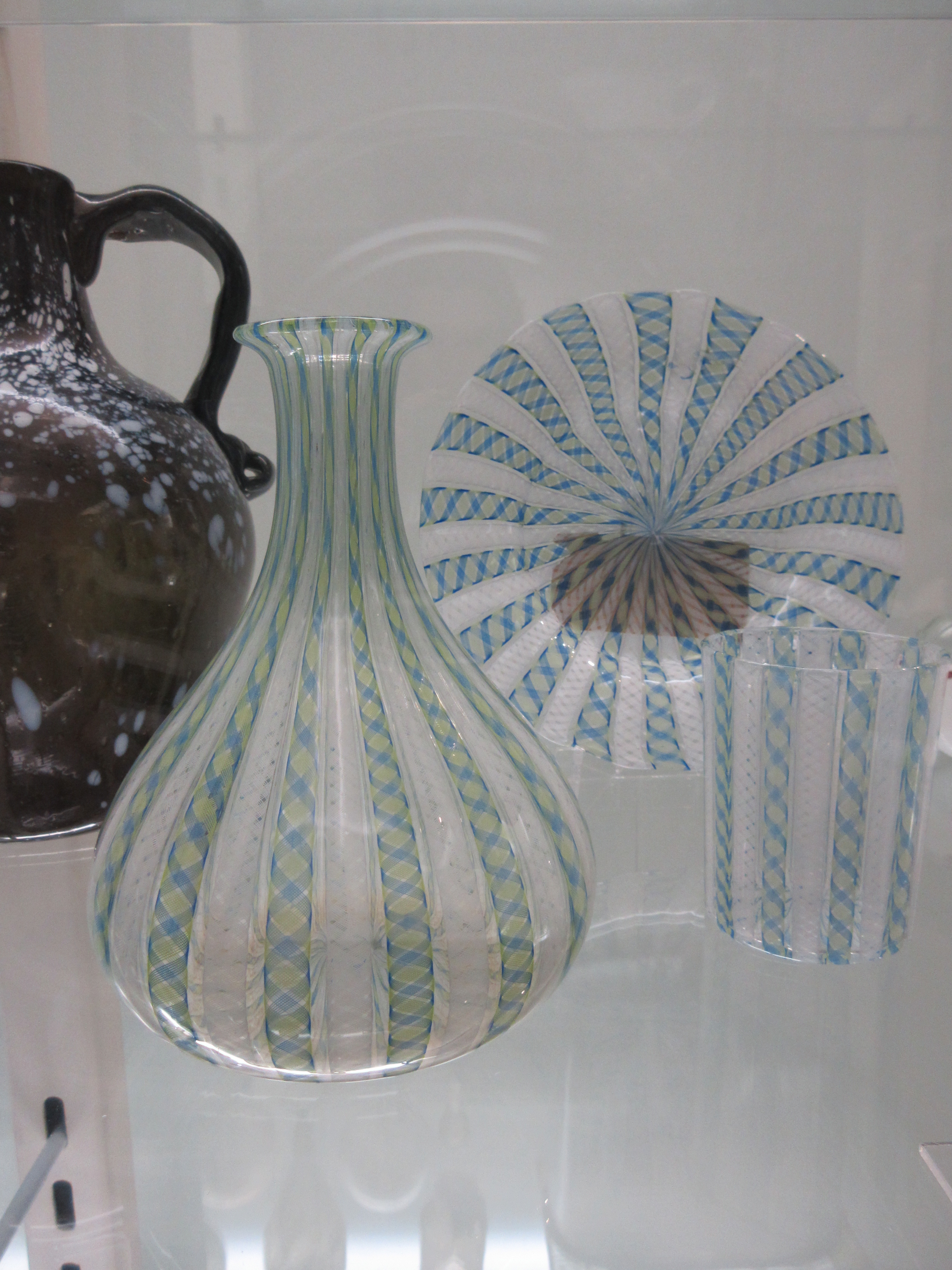
On the final Saturday, I went to the Turner Museum of Glass for the first time ever. What a hidden gem! Hard to get find, it’s a real reward to see the amazing collections, and, rather than to just appreciate the glass for its aesthetic quality, which is what I’d normally do, it is a whole new dimension to have it exhibited in the department of engineering (I think) where the focus is on the properties of the materials and how glass is made. There are some stunning objects – a bit of Lalique (a moth), a rock crystal Buddha, and glass mainly from various European countries, as well as some ancient Egyptian pieces. Fabulous collection. While there, I chatted to Lynne Fox, the university’s Heritage Officer, and Professor John Parker who is the curator, and hopefully there are plans to do more events, and even have a handling collection one day.
Turner Museum of Glass
Later in the day, I returned to a lab in the same building (Robert Hadfield), for a fantastic glass-making demonstration in a seriously high-tech lab full of all sorts of amazing gadgets. It was very exciting, and the second time this year when I have been in a lab doing dangerous experiments! I had no idea what molten glass looked like. It really did remind me of the Mervyn Peake painting at Manchester Art Gallery.
Glass making demonstration
Glass making
It was amazing to hold a glass blob (a bit like a wiggly tadpole shape), for the ‘Prince Rupert’s Tear Drop’ experiment which shattered in my hand, and even though I knew it was going to do it, was still quite a shock!
The final highlight of this year’s Festival were several bird-related events and exhibitions. Firstly, hearing the brilliant Tim Birkhead speaking about the decline of the dawn chorus in the Spiegeltent. As always, his talk was a source of all sorts of bits of new and fascinating information. Such as: bullfinches were as recently as the early C20th, trained to sing German folk songs, and can actually learn them but singing up a semitone(!); there are two particular notes sung as part of nightingale (I think) mating rituals, which can be recorded and replayed to make the birds breed; in the winter, Stoney Middleton is the place to see starlings in their millions. But also that the dawn chorus has fewer birds even than in the 1980s when I was growing up, as more and more of the insects eaten by birds are in decline due to intensive farming and use of land to grow food – all over the world. A massive problem. Made me think that not procreating is definitely a positive step for the planet.
Save the Birds
After hearing some tweeting birds in the Milennium Gallery avenue, I then headed to Sheffield cathedral. As well as seeing the lovely new interpretation there, an exhibition entitled ‘Loomery Scrolls’ by Chris Wallbank, who was artist in residence with Tim Birkhead on Skomer, was absolutely fabulous – and worked beautifully in the cathedral. Vast scrolls of paper documented the birds on the cliffs, recording their numbers in many instances, and with different ‘experiments’ to record their habits. I loved it.
Chris Wallbank, Loomery Scrolls (the oldest guillemot)
The oldest guillemot
So, that’s my little Festival of the Mind. Thank you everyone involved. Sheffield is brilliant.
I have been back for just over a week since the amazing End of the Road festival. It never fails to amaze me how brilliant this little festival is – the most happy and friendly event of my year, and this year’s was no exception. I love it. There are always surprises, things that blow you away when you are least expecting, new discoveries around every tree, things that you find and think no one else has spotted, and firm favourites that don’t let you down. Oh – and just the small factor of the best music in the world ever. In fact this year, the festival was happier and friendlier than ever before, and actually there aren’t any words to describe my excitement – but more of that to follow…
I went with my friends Genevieve, Helen and Mark, but I got there earlier than they did (as soon as the gates opened on Thursday) because I am a geek and like making a nice cosy camping area/nest, and secretly I wanted the challenge of trying to do it all by myself. I left later than they did, staying until Monday (because I could). Four nights of excitement. I aimed straight for the place near the big tree (and the postmen) where I have camped before with Amy. This time with a ridiculous trolley which although I am proud to have built all by myself, did definitely not do the job on mud and long wet grass. Cue lots of assistance as I battled uphill, from friendly people, and a mental note that Mr Trolley is far better. Up went the tent. The gazebo was less successful – I battled in the wind, nearly taking off in the process, much to the amusement of my neighbours (already quaffing the cider) until they couldn’t contain their laughter any more and came to my aid. And then it was all set up. Complete with bee bunting from All Good Stuff.
Setting up camp
And then I was off. If you haven’t been before, EOTR is held in the Larmer Tree Gardens, once home to the Pitt Rivers family, a magical Victorian pleasure garden with follies and grottoes and strange pagodas, and still full of peacocks and macaws. This year there were even little baby ones strutting through the crowds, seemingly oblivious to it all.
Baby peacocks
On the Thursday night, there were a few bands playing in the Tipi tent for the delight of the early arrivers. Post Goan fish curry (the food is a real joy here), I saw Cheatahs and then Ezra Furman complete with dress and saxophone (I think, but after so much musical excitement, I may get muddled). I do my homework (yes, I said I was a geek!) beforehand and my little spreadsheet lists all the bands and a few comments and a score out of ten (!) based on about 20 seconds of pre-listening on Spotify, unless I love it, in which case I listen for longer. Comments include things like ‘stunning, Neil Young-esque’, ‘interesting folky musicians’, ‘lovely cowboy music’, ‘kill me now’, ‘bawl the eyes out’, ‘bit too noisy’, ‘let’s dance’, ‘Rockabilly I bet he has a quiff’… It’s fun when I get it totally wrong and discover something fabulous, but it’s also reassuring and quite exciting when I get it right. Anyway, both of these first two bands were great but a bit less mellow than I usually like. I bumped into a friend at some point during the evening, Ken, with his group of friends who always have a press pass for photography for their music website The Rock Club, and had a few beers with them. So even though I was on my own, I wasn’t really, and EOTR is the sort of festival where people are so lovely and friendly that I would be quite happy to go on my own anyway.
Friday started with a hot shower (managed to have one every day and thoroughly enjoyed the walk back to the tent just wearing a towel(!), and this year, there were a few more than usual, and some beautiful flushing water loos too – and I’d like to acknowledge the incredibly hard work of the loo attendants, who literally worked their socks off all day and night to ensure the loos were clean and had never-ending supplies of loo roll!). I had some breakfast then went of for an exploration now the main site had opened. Amazed to see the cinema no longer in a tent, but in a proper building, I wandered off into the woods to see what I could find and remember where things were. I love the quirky art installations. Here are a few examples…
Flux by Jess
Pirate by David Shillinglaw?
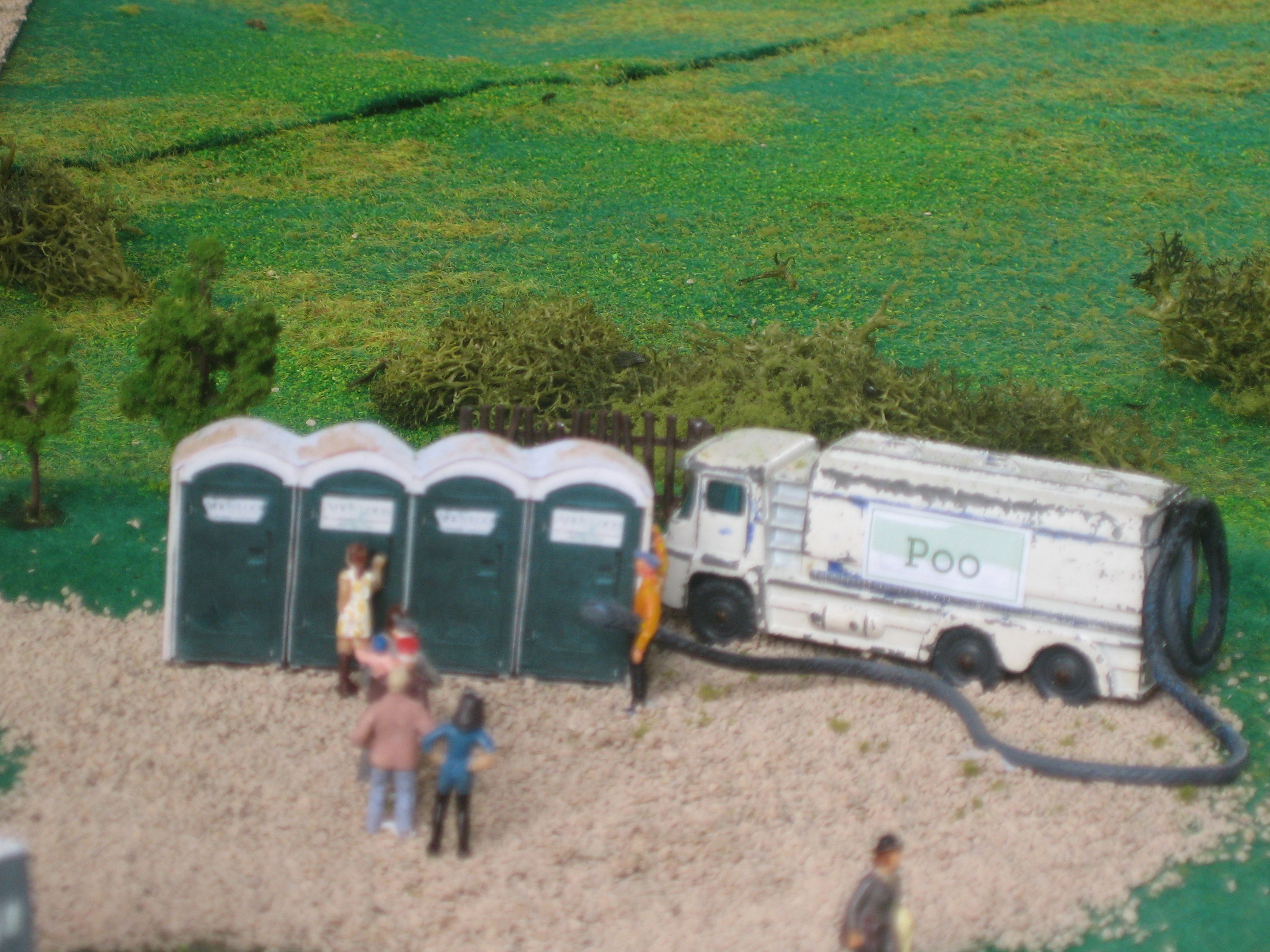
Poo Lorry from ‘World Within’ by Tori and Joseph
The latter was incredible – a miniature version of the entire festival inside one of the buildings in the garden. Lots of very amusing detail. Continuing my wanderings, I headed to the library stage, a new invention as the previous woodland library must have outgrown itself. Here I listened to the very modest poet Will Burns, followed by a highly entertaining talk from music magazine editor Mark Ellen (who played in a band with Tony Blair and amongst other accolades told anecdote after anecdote about Live Aid and almost every singer since the 70s). And then it was time for the music.
I might get the orders a bit wrong – but I saw the fantastic Phox on the Garden Stage and fell in love with their bouncy tracks ‘Slow Motion’ and ‘Kingfisher’ – for me there’s definitely a twinge of something Merrill Garbus about these.
Loved the golden spandex catsuit of Arc Iris next up with their lovely cello playing:
And then I headed to the Tipi tent, after some delicious Tartiflette, to see Laish (singer Daniel Green). Particularly liked the solo acoustic song he was playing when I got there – lyrics something like ‘When I’m coming for you’ – but not sure what it was as this is a new discovery, and really liked what I heard of the rest of his set.
Then I saw the quite extraordinary Alexis Taylor, complete with his thick-rimmed NHS style specs and eclectic electronicky folky music. Loved this singalong one with lots of catchy la-la-las.
And soon after that my first friend, Genevieve, arrived – not before I had celebrity spotted Sheffield’s finest Richard Hawley checking in at the artists’ entrance. Genevieve and I did the obligatory squeaking and explorations in the now twinkling woods. Tibetan Momo for dinner, and then Helen and Mark arrived, built the tents and got ready for the evening’s party which consisted of British Sea Power at the Garden Stage (the third time I have seen them this year!) complete with their bear.
The day’s highlight was however, the Gene Clark No Other Band – this 1974 album (which I confess I had never heard until doing my EOTR homework and falling in love with it straightaway and buying the original) has been restaged by an almighty line-up of musicians including Daniel Rossen from Grizzly Bear, Robin Pecknold from Fleet Foxes and several playing in other guises at this festival. Having toured the US, this was the only UK performance – a proper once in a lifetime experience to be there, hearing this, in the Dorset countryside. It was absolutely magical and one to remember forever. I think I can hear myself squealing on this film…
And so ended Friday. (After a few cheeky ciders from my massive vat of the stuff from the quirky Owermoigne Cider Museum…)
Saturday. Little did I know when I woke up bright and early to cook my fellow happy campers a proper fried breakfast on my cooker (complete with toast!) that this was going to be the most exciting day ever…
One of my discoveries in advance was Nick Waterhouse, who was playing on the Woods stage first thing in the morning. I loved what I heard on Spotify, and guessed that this was a band to get us in the mood for a happy bouncy day ahead. Yes, he was the rockabilly one who I was not disappointed to see did have that quiff and the 1950s outfit.
Nick Waterhouse
He was incredible and had a truly wonderful band: two women included a really powerful, stunning singer whose bluesy voice had the audience totally enraptured as she wielded a variety of different tambourines and an amazing baritone saxophonist, and then there was the keyboards guy with a Hammond organ (who I am sure kept smiling at me ;o)), bass guitarist and drummer who all did their little jazzy turns every so often. ‘This is a Game’ had me dancing right from the start of the set.
At some point, lunch was from Moorish – an amazing plateful of deliciousness. Then Lau, three extraordinarily talented musicians whose proper folky tunes, accordion and fiddle were absolutely beautiful and mesmerising. I still want to know what the spoon and fork gadget they had on stage was.
I also popped in to Celebration (a bit loud) and The Ghost of a Saber Tooth Tiger, had a nice cup of tea (brewed for exactly three minutes!) and then saw the fabulous, highly charismatic St Paul and the Broken Bones. Lead singer Paul Janeway was spectacular – as almost gospel-like singer (definitely not the voice expected from a small rotund white man!) and as a brilliant dancer – a great showy front man in this seven piece soul band which again had everyone dancing around the grass.
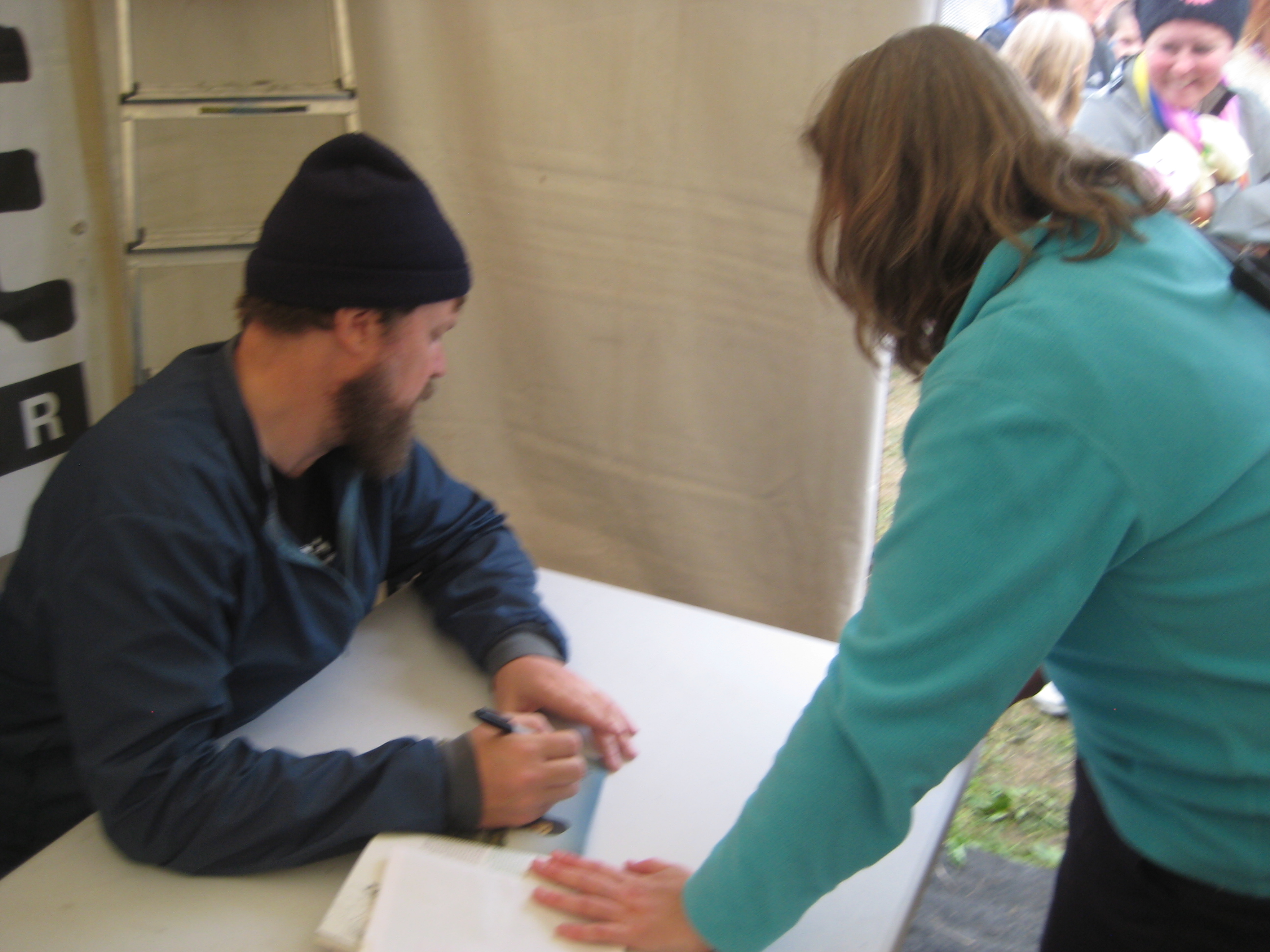
And then came the utter highlight of my whole festival… I am not sure why I went for a wander, or how I ended up in the Rough Trade tent at this time. Serendipity is the most joyous thing. There was a big queue as I staggered in, and I looked into the corner to see who it was. I did a double take. He looked very familiar. It was JOHN GRANT! Should I stay? What would I say to him? Would I get any words out? (It could not be worse than the hideous Germaine Greer moment in about 1997). I got into the queue and met another lovely person called Louisa in front of me. We were both as excited as each other and it was good to have someone to talk to to alleviate the palpitations. (Another blog post to follow about my thoughts on all this).
Methuselah (and John Grant and me)
Well, I said ‘Hello John Grant!’, shook his hand, and was beaming from ear to ear as we chatted for what seemed like quite a long time. Anyway, like I said, this deserves a whole blog to explain the Methuselah caption and some of my conflicted thoughts about it all. Louisa took loads of photos for me, and I have never ever in my life had so much adrenaline pumping round my body. What an absolutely lovely man. Real generosity of spirit to be so seemingly friendly and at ease with a queue of complete strangers, all of whom think they know you, yet of course they don’t. After swapping emails with Louisa, I scampered back to the stage to find the others, and just couldn’t stop jumping, grinning inanely, smiling, looking at the picture he drew for me, squeaking like an idiot, and forgetting that the people around me were trying to watch another band… I remember lying on the grass wiggling my legs in the air. It’s been a long time since I have squealed so much and it was fantastic. Thank you John Grant.
I am not sure what band was playing at this point as it’s a bit of a blur… I think it was Johnny Flynn and the Sussex Wit and I think they were really good, but my head wasn’t really there. Fuelled by an early morning cocktail and several ciders, Genevieve and I went to the Photobooth to have our portraits drawn by Rosie Curran. I think her self-described 30% accuracy rate is slightly harsh as the picture did look vaguely like us, and she said she had done over 200 that day. This was followed by the tortured Perfume Genius but again, I think I was too over-excited to concentrate properly.
Tipi tent
Back to the tent to put the socks and jumpers on. Then I wandered through Marissa Nadler in the Tipi tent and Unknown Mortal Orchestra (I think?) in the Big Top, before Gruff Rhys‘ inspiring American Interior set with a few favourites thrown in for good measure. Like ‘Gyrru gyrru gyrru’ (which I just had to look up how to spell). He is so brilliant live (miles better than the recording below). A fantastic set – so glad I made it.
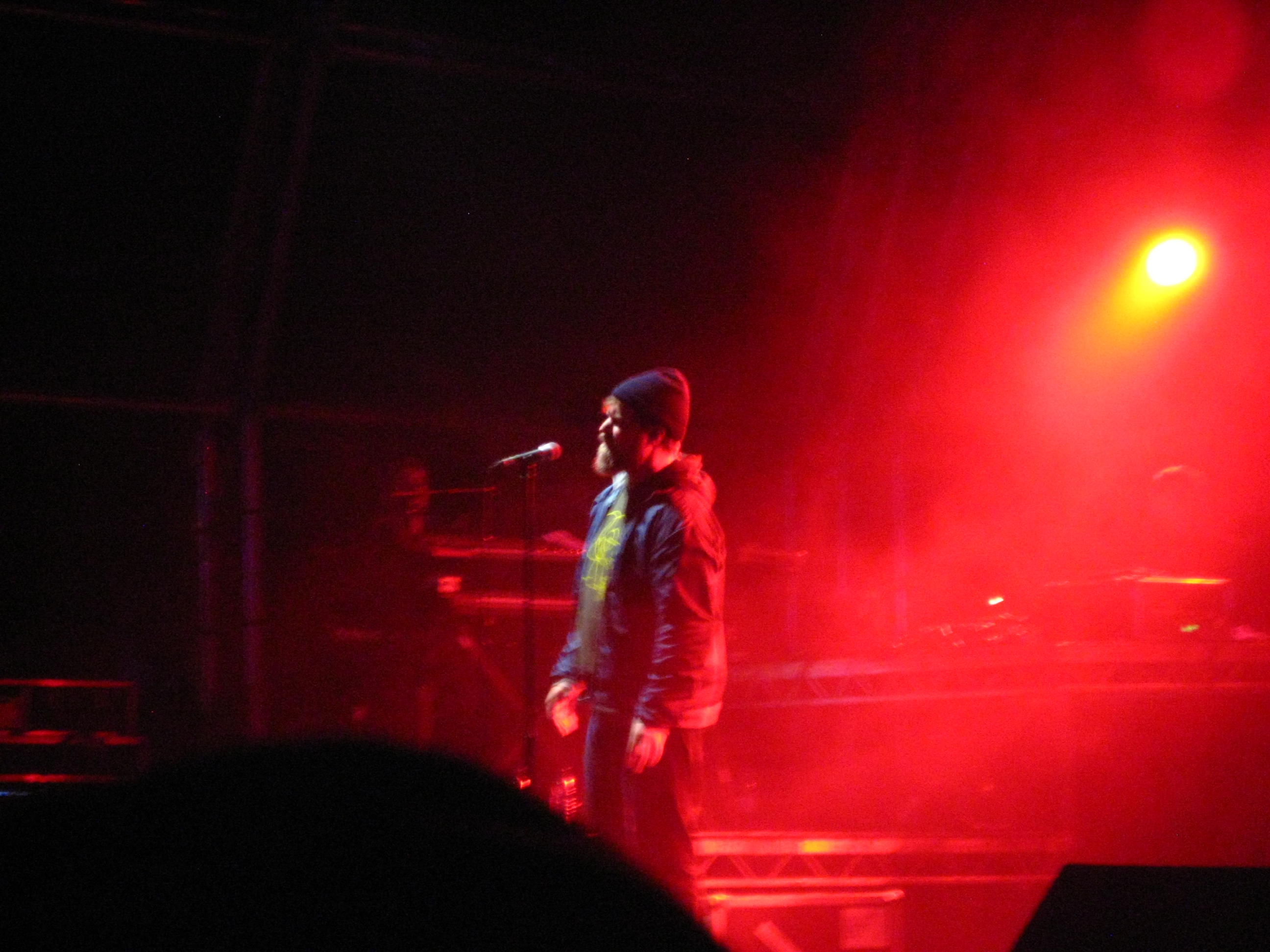
And then my friends went off to see their highlight – The Flaming Lips. I didn’t. I only know one of their songs and despite hearing what a great show it would be, I knew I wasn’t going to see them. John Grant was my reason for being there, so after discovering a new bar next to the Garden Stage, I went to get prime position at the front of the stage all ready for the most amazing performance I have seen.
John Grant
There were tears.
Not least during Glacier.
And there was still more that day/night. A meet-up with the others, who loved what they had seen and recounted tales of Flaming Lips in a zorb going into the audience. A bit of audience participation in some random people’s dancing activities (‘in in in the middle’ with Mark doing an incredible turn and a headstand!) in the food area. Then to Richard Hawley who was DJ-ing in the Woods disco, and a bit more staggering about looking at sparkling things, taking all sorts of random photos before falling into bed.
Twinkly trees
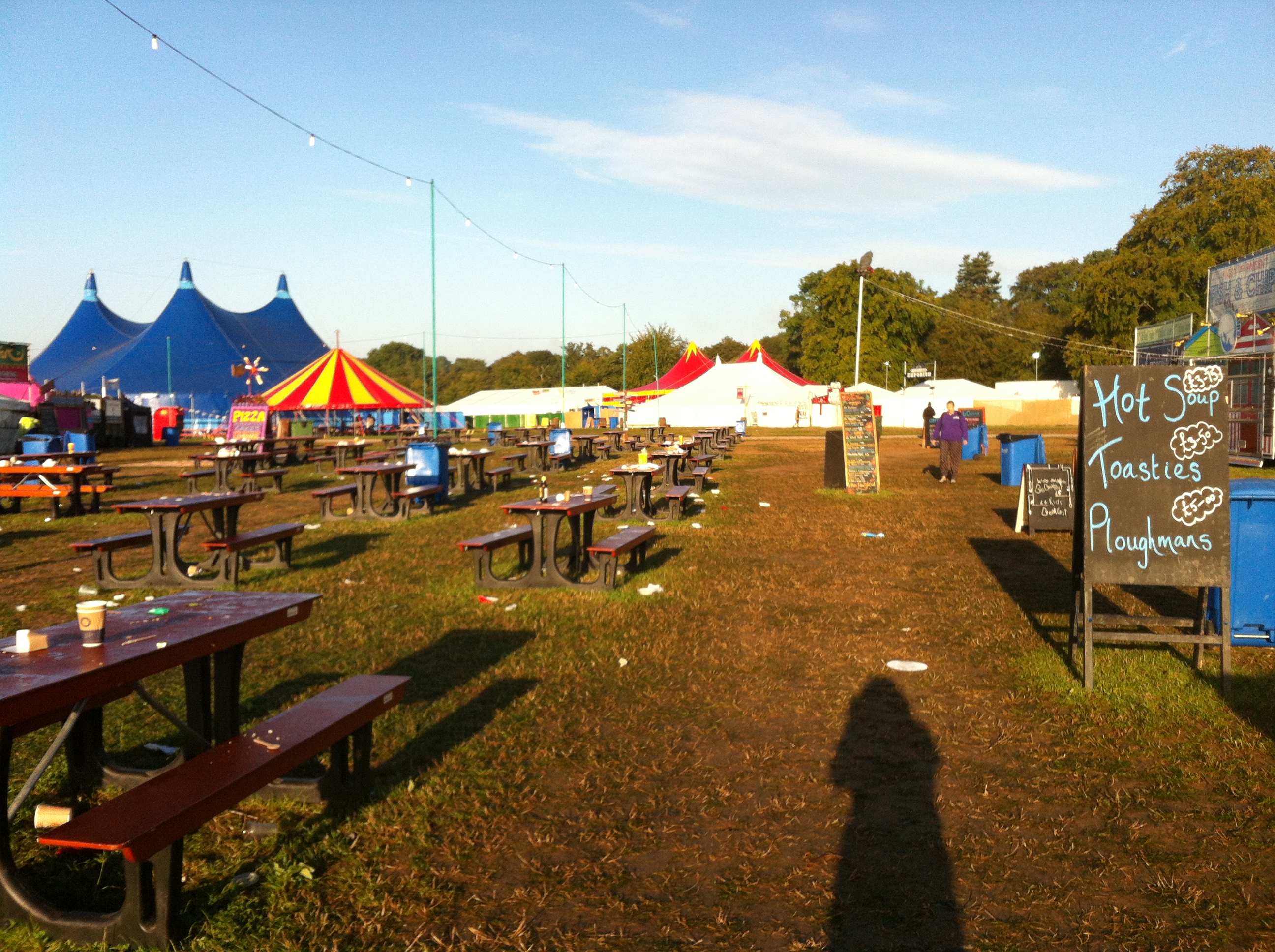
On Sunday morning I woke up super early, probably still slightly intoxicated, and had the most lovely walk around the completely deserted site, enjoyed a bacon bap at the Red Bus in the sunshine. Strange how there can be over 10,000 people there, but I was the only person on an early morning stroll.
Very early Sunday morning stroll
The first band on Sunday was the brilliant The Melodic, again a discovery I had made during my homework, and who were strangely playing in the Big Top (which is usually a bit loud for me!). They really were melodic, a bit Andean in some ways, with three guitars and a mini mouth organ piano thing (what is that called?). Lovely first band of the day.
The next band was a real discovery, enhanced also by the discovery of a new secret garden, just near the Garden Stage – can’t believe I have never found it before, but it was a beautiful and peaceful place from which to listen to the gorgeous Futur Primitif. This made me very happy indeed.
I think Genevieve left at about this time to get back to her boys (I did note her conversation with Mr Trolley though about the mattress and fairy lights, so that bodes well for next year!) Then I pottered off to the Comedy Stage to see a fellow Dorset woman, Jessica Fostekew. Wasn’t sure to begin with, but laughed out loud and loved her by the end. Curry Shed for lunch (or was it dinner? I can’t remember but it was yummy whenever it was). Caught the end of something pretty remarkable in the Tipi – the eccentric Lonnie Holley, making things up as he went along, a rambling and strange monologic tune, and a real character. ‘Thumbs up for Mother Earth’ he sang, and we obliged and loved it.
Lonnie Holley ‘Thumbs Up’
Stealing Sheep are always very jolly, and their Garden Stage set was fun with nice bashing of the bass drum. Then Daniel Rossen again doing a solo slot this time, a weird slot on the little theatre stage in the garden by Yo La Tengo which we couldn’t really hear as it was a Q&A with the audience thing.
My next surprise highlight was Radiophonic Workshop in the Big Top. These guys reminded me of my Dad, with brilliant between the tracks chatting with the audience, a whole load of 1950s/60s-looking gadgets, and white coats – the latter obviously a requirement for their inventions in sonic discovery. Just had to stay for the whole set, which of course included the Dr Who theme tune. Which I filmed, and might post to announce when I am a Dr. This meant that I sadly missed Tuneyards‘ rendition of Gangsta, first heard and loved at EOTR in 2011, but I enjoyed the remaining few songs in their set. Helen and Mark had to leave after this to get back for work on Monday, so I was on my own again.
Caught some of Andrew Combs in the Tipi which I really enjoyed. Proper EOTR style Americana. Then the legendary Richard Thompson on the Garden Stage. Totally exhausted by this stage, I made it to see the brilliant Tinariwen on the Garden Stage, and finally Wild Beasts headlining on the Woods and closing the festival although after so much excitement in such a short time, I was a bit too sleepy, and his opening comment ‘what are you lot doing here?’ annoyed me (must have been really tired!), but I did love Wanderlust.
And so, three and a bit days of lovely friends, intense and amazing music, happy people, delicious food, lovely woods, and a feeling of utter freedom, escape from the world, and joyful exhilaration like nothing else, it was time for bed and to leave the next morning (with a Mr Trolley this time!)
Thank you so much to Genevieve, Helen and Mark for such a wonderful sunny time, and to all the people who work so hard to make End of the Road the best festival in the world ever. To the organisers, musicians, backstage crews, artists, catering staff, Andy’s Loos, volunteers and everyone there for being lovely people, thank you. I left the site listening to Pale Green Ghosts on full blast (my picture clutched next to me on the passenger seat), crying my eyes out.
I am writing this partly to clarify some of my thoughts. Yesterday, I went on a massive walk of about 10 miles, from my house, to the wonderful Mayfield Alpacas and back through all the parks from Endcliffe to Porter Clough. Anyway, on my way back through Endcliffe Park, I was accosted by some researchers from Sheffield University (I presume, although I don’t think it actually said on the consent form I filled in hastily), who were making a film and interviewing participants about their views on a recent report (perhaps this one?) which looks at Fairness and Equality across Sheffield, and encompasses things like indices of deprivation, educational attainment and so on in different regions of the city. Some of the statistics were astonishing. There’s a 10 year difference in a woman’s life expectancy between Hallam/Broomhill areas (85) and Burngreave (75), and in the city, 57% of the population attain grades A-C at GCSE…
I am not sure which department the researchers were from – probably some sort of Social Sciences (and reflecting now, I think their ethical approval forms were well short of what I would have expected as I was given no website or email address to contact following the interview) – but the experience was one that really made me reflect on the nature of doing social research by interviewing, and also by filming this research, as a valid method. The process took about 10-15 minutes, during which time I was shown some statistics, maps, diagrams, and told a bit about the report. And then I was asked questions ranging from: whose responsibility is it to ensure fairness and equality? What do I think are the main causes of inequality? Had I experienced inequality in the city? Who did I think was most unfairly treated in the city? And because I had explained that I worked in the arts, I was asked some questions about whether I thought that the arts were a way of ensuring community cohesion and fairness.
These are all MASSIVE and problematic questions. Had I had half an hour, or even a day, to ponder, I think my answers would have been completely different. As it was, and perhaps because of some of the maps used and my scant knowledge of these areas, my answers tended to focus on people from some ethnic minorities as perhaps communities suffering the most inequalities within the city. I didn’t mention class at all, which I might have done given more time to think. And neither did I mention anything to do with income, money, taxation, access to jobs and benefits for disability and so on. All of which I might have done.
Now I have had time to think further, I think what I said, and what I assumed, was deeply problematic and I wish to some extent, I could retract it. I gave some sort of utopian answers to the questions: everyone should have equal access to opportunities. It is all of our responsibility. It could have been a party political broadcast. My own repeated view that education is at the root of all these issues now seems somewhat naive. But I do think that education is central. But by education I mean something very broad: something that includes our values, attitudes, beliefs. Not necessarily anything to do with school. And certainly nothing imposed through politicians.
Anyway, all of this was captured on camera, and will be made into a film that will go online. I am not sure when. Presumably it will be edited into soundbites. And taken out of context. And I might be represented as coming from a particular background when really I would not represent myself as such. I was not asked for any demographic information. But people will watch the film and make their own judgements. And while I don’t think I said anything completely inappropriate, what I did say, does not represent what I really do think when given time to consider.
So does this then mean that the interview as a means of capturing ‘data’ is even more flawed than I thought. Yes, we know it can be fluffy, subjective (both in what is said and how it is interpreted): but this process seemed incredibly uncomfortable as one on the ‘other side’. I felt that the interviewers were making judgements on me and my background, whether they were or not. How did they select to interview me as I was wandering through the park? What are they going to do with my comments? It just feels somewhat exploitative and somewhat dangerous.
And I too have used interviews in my own research, so am I just as guilty? I think one issue of yesterday’s experience was the scripted nature of the experience. There was a list of questions, and no time to discuss, argue, deliberate further with the interviewer. Which makes it utterly unreal. Had I been discussing these things in a normal environment, my ideas could have shifted, I could have been persuaded of other things, another person could have brought in an additional idea and thought. But as it was, it was just me, and my spur of the moment thoughts after a very long walk on a Sunday afternoon. I don’t really want to see the final outcome.
Last night I went to an absolutely brilliant event called ‘Faith and Fear in Philadelphia’ which was held at Sheffield’s lovely little art deco Library Theatre. Shamefully, I had never been there before, but it’s a wonderful venue which feels intimate yet has plenty of space for an audience of about 250. It was part of the excellent series of ‘In The City’ events, managed by my friend and former colleague, Amy Ryall, from the University of Sheffield’s Arts Enterprise team and organised by graduate intern, Nick Potter.
The month-long series of events is all about celebrating interesting and usually quirky collaborations between academics and others (I am not going to use the term ‘non-academics’), and engaging the public with these ‘non-traditional’ creative research projects. Public engagement is of course a big buzz word within universities (and many other institutions), at danger of just being another tick box exercise for the REF or for funders, but it strikes me that Sheffield’s approach is a really dynamic and creative one, in which risks are taken, projects are often shared in their incomplete and raw stages as processes rather than products, and playful and fun ways of doing new things are encouraged. It feels really fresh and as though these are projects that really matter.
So last night’s event ‘Faith and Fear in Philadelphia’ was a fascinating collaboration between academic historians and musicians from Americana band The Payroll Union who had come together to explore how we tell stories about the past, and particularly the history of Philadelphia in about 1840. Not a traditional gig, the evening began with various historians and musicians in conversation. They discussed similarities between the business of academic history and of music – or rather, song-writing. I was intrigued that most of these conversations focussed purely on narrative: both history and song were seen as story-telling devices, just different ways of interpreting people’s tales, or modes of research. While I agree with this to a certain extent, I think there are problems with making such a comparison. Not least the fact that (despite being a singer) I am generally not really someone who listens to lyrics of songs. So for me, they rarely tell a story unless I really really concentrate – and even then, the words might be blurred and misinterpreted. For me, I think there has to be something more than narrative in music. Of course some of the panel also pointed this out too: music is about emotional engagement. It does something utterly beyond narrative, beyond words. I can enjoy a song without having a clue what the words were. I was not sure if the same is true for history. Although as the evening developed, I think that thinking through history in an emotional way, rather than as it seemed, a series of facts, would certainly have made it more appealing to me when at school. I don’t really care what date something happened in, or even really what happened, but I am interested in how and why people responded to particular contexts.
Many of the comments in this discussion began “I am not a historian, but…” And this puzzled me. Why are we often so keen to identify ourselves through what we are not, rather than through what we are? I am not a historian, but… But more significantly, I found the implied separation between the ‘academic’ and the ‘creative practitioner’ quite problematic. There are hierarchical and value-based judgements at play here. Is the story-telling of the historian deemed more rigorous, or better, than that of the musician? Of course I think this project is working hard to break down what I would argue are false notions of a dichotomy between research and practice, the academic and the creative. But these things die hard. Why does it matter if I am not a historian? We are all storytellers.
So it was when the amazing Payroll Union began playing the 13 songs that they have written for this project, that I really began thinking even more. What a fantastic idea to not only be given the lyrics of the songs in the programme, to read through and learn from – but also to have these lyrics footnoted! A stroke of genius, and one that I really wish would catch on. Song writers are just that: writers, poets, storytellers – as well as being musicians. So to miss out on half their creation through not knowing what the words are, seems sad. Writing songs is a real craft, and here, the songs have been so deeply researched using historical documents, first person accounts, interviews, maps, that it was amazing to be able to read and take in the detail through this brilliant programme. I actually learnt more about American history and the city of Philadelphia last night – because of these lyrics – than I had ever known before. And it didn’t matter that they were imagined characters, not ‘factual’: in fact this made it all the more ‘real’. Better than history.
What I am not sure of though, is whether I learnt about the history through the music itself. The band is brilliant – fabulously talented musicians with great energy, passion – and the songs are fantastic. I loved them. I would have loved this gig even if I had no idea what the words were about, because the music grabbed me. If I had been at the End of the Road Festival, I could have listened to this all afternoon. But I wouldn’t have learnt anything about Philadelphia. And as the band themselves stated, the music itself is not authentic, for there are no recordings and no way of knowing what folk songs would have sounded like then. What is authenticity?
So here, I have questions again about the distinctions between academic research and creative practice… Where are the similarities in the ways of knowing? In ways of understanding the authentic? If I wrote a song about Einstein’s Theory of Relativity, would that be doing the same sort of thing as this project did? Or if I made a collage of how I imagine Moyamensing, would that have been doing something similar? What is unique about a historian working with a musician? How would this project have differed if a photographer or visual artist were the collaborating partner? Yes, the outcomes would have looked different, told different stories, but they would have still told stories. I always end up with more questions than answers.
Anyway, whatever these are, it was brilliant, thought-provoking, inspiring – and amazing music. I look forward to buying my copy of the album and reading the lyrics at the same time. And I do hope that more bands will start sharing lyrics – with footnotes – at their gigs.
Today I am going to London to the Institute of Making, to take part in a workshop for postgraduate researchers, entitled ‘Restoration’. We have been asked to bring with us a broken book, one in need of restoration. I have brought three such books with me: two belonged to my grandmother and one belonged to her sister, my great aunt. The one I am hoping to work on this afternoon is my grandmother’s handwritten recipe book, dated from April 15th 1939, and with her maiden name, Vera Illingworth, inscribed into it in that familiar rounded yet somewhat spidery handwriting – the handwriting of an infant school teacher. She would have been almost 24 when she started writing in here, and I wonder if it is some sort of preparation for marriage and setting up home, having to use lots of recipes as she would have cooked every day. I wonder whether she wrote it with her own mother, perhaps using that tried and tested Yorkshire cooking of mother.
Granny’s recipe book: open
It is a wonderful document of social history in itself. The first recipe is for ‘mock cream’ – perhaps the real thing being unavailable during the war years? A white roux sauce, with extra caster sugar and vanilla essence. I might try making it. The pages are covered in blots and splodges of ingredients, and the edging of the pages brown with grease from daily use and handling. Corn flour pudding, egg cutlets, and in another’s handwriting, rasin loaf, rice cake, lemon cake with a strange statement “They are called Lemon fingers” and then Granny’s own writing, ‘you “barmy beggar”‘!! No idea what this means or why it is in here in quotation marks. Some recipes follow from Mrs McMillan, whoever she was, including Wartime Steamed Pudding, made with self raising flour, suet, sugar, ginger, milk and vinegar. Sounds revolting. But also are Granny’s jam recipes – delicious and ones to remember to use – raspberry, plum and damson, strawberry, blackberry jelly, chutney, gooseberry. What is listed as Fruit Mousse, with an originator Aunty Roebuck (who I think kept chickens at Green Moor), is what Granny often made: I never really liked this combination of jelly and evaporated milk. And her delicious ginger biscuits too. Must make a batch of these. They are gorgeous and she always seemed to have a freshly baked tinful.
Behind the recipes are traces of other notes, additions in l.s.d. – no idea how to do such sums these days. Also inserted are cut out recipes from labels and magazines.
And as the book progresses, I think I recognised my mother’s writing – perhaps as a school girl, we have Aunty Marion’s sandwhich (sic) and Mrs Bond’s chocolate buns.
The back pages have a non recipe – the instructions for knitting a vest, followed by the months in which to sow, and how far apart to sow, various vegetables.
I now wonder, having read through while sitting on the train, whether the book actually started during Granny’s time training to be a teacher in Hull. I think this makes sense – it might be her domestic education notes perhaps, which she continued adding to over the next 30 years or so? Although I don’t think the dates tally, as she must have been younger than 24 when she did her teacher training. So perhaps my earlier thoughts, that it was just her recipe book, are more accurate. My mother might know.
So we’ll see how long this resolution lasts. Feeling most terrible that I haven’t written anything since September. Perhaps this is reflective of both how busy I have been, but also (and paradoxically) of how paralysed I have been in terms of writing research-related things…
Firstly, my attentions were on Mouseion: artists’ reflections on museums, an exhibition which I curated in the School of Museum Studies in Leicester, working closely with Cy Shih who designed the show, and which ran from late September 2012, until February 2013. Having the opportunity to curate this show, which involved 7 artists from across the UK, all of whose work says something about museum objects and collecting processes, was a wonderful experience, but was one that made me realise how much I am missing actually being in a museum or gallery environment. The grass is always greener and all that… I know that the School of Museum Studies are currently investigating the possibilities of running practice-based PhDs (or some sort of title to be decided), akin to those at Manchester. While I made a very conscious decision to do my own PhD full-time and to step out of the workplace for a while, I now wonder whether perhaps this option would have been a good one for me. Not that it existed at the time. I’m not sure, but I know that I am happy ‘doing’.
So, anyway, going back to things that have been occupying me: in addition to the exhibition, and my PhD Rep responsibilities (which were at their peak during the October first week of the academic year, and its preparation), I am also managing our PhD conference, Museum Metamorphosis – which will be held in November 2013, and for which we were successful in our AHRC funding bid framed as a ‘Collaborative Skills’ project working with Leicester Arts & Museums Service. I have been involved in several other things including teaching in the department (for Dr Viv Golding’s Museum Education Option, for Dr Sandra Dudley’s Material Culture series, and for various MA ThinkTanks, mainly relating to objects and the exhibition), as well as marking MA practice essays and oral presentations. I am also working freelance for the Research Centre for Museums and Galleries as a Project Officer on the Museums, Health and Wellbeing Project in the East Midlands. My role is focussed primarily on working with the Children’s Hospital Schools in Leicester to develop opportunities for access to museum collections through a website. I’ve also done some bibliographic research work for Dr Sandra Dudley, for her forthcoming publication on displacement of objects and people.
Away from Leicester, my freelance work doing interpretation consultancy continues with object-based workshops from Lincolnshire to Cumbria. I am still the GEM convenor for Yorkshire & Humberside: we held a very successful conference in Doncaster in November, Learning with ACE, about partnerships and new structures in place under the new governance of museums by the Arts Council, and after a series of monthly Study Visits during 2012, I am working closely with my co-convenor Sue Mackay, to plan for 2013. I am also mentoring Odile Masia at the Imperial War Museum North for the AMA. A busy life. So where does the research fit in? And why do I still see research as something of a luxury, something that shouldn’t possibly take precedence over all these over things – but that in reality – at least up until now – hasn’t done?
When I first set out on the PhD journey, I thought I would probably want to stay within academia, but I am now not so sure.
The more observant of you (who actually follow the blog – if there is indeed anyone out there?!) may have wondered why in my previous Newcastle post, in a link to the photos at the end, and at the end of the set of photos of Newcastle there were some images that were not taken in Newcastle…
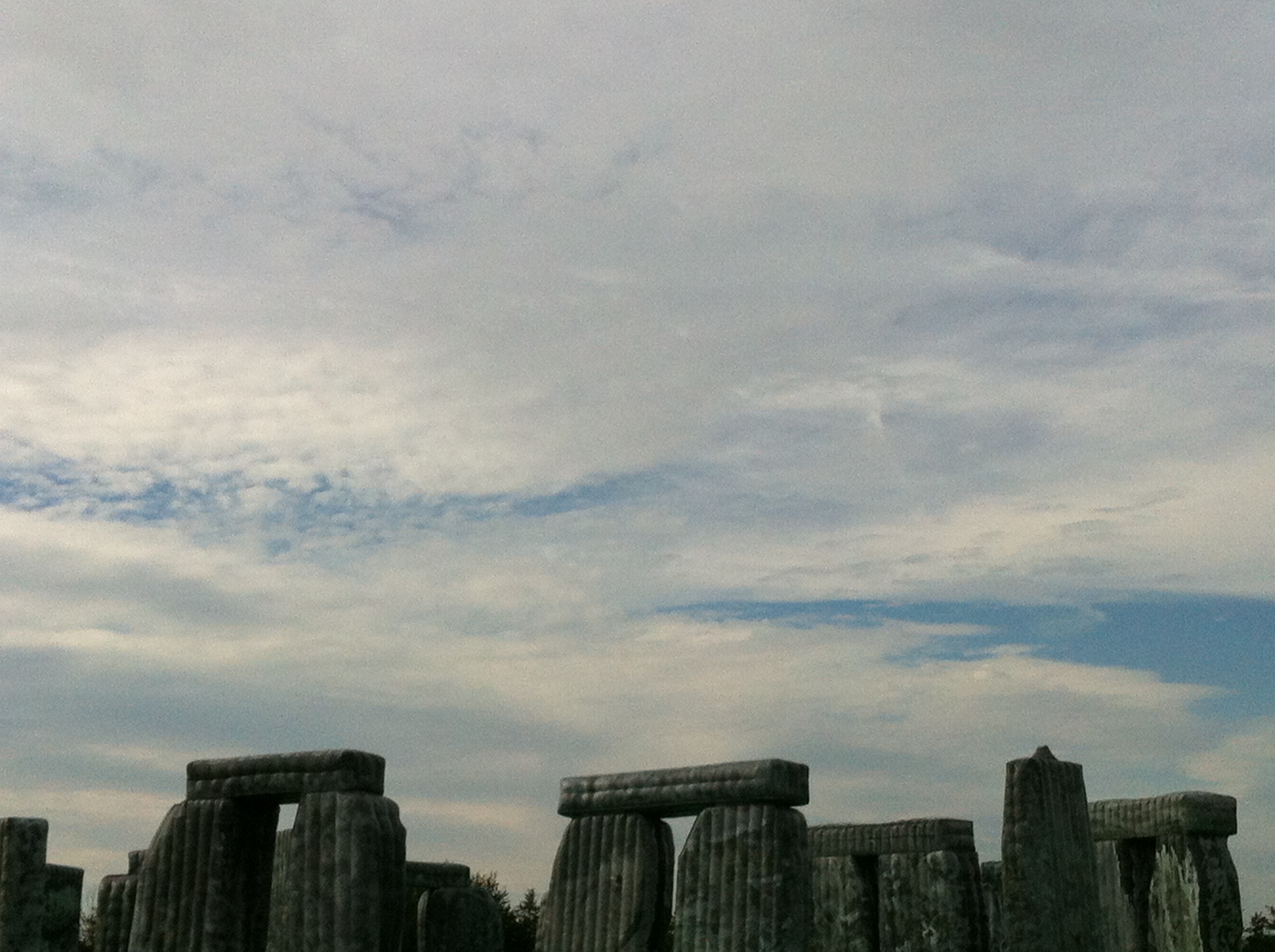
Jeremy Deller’s Stonehenge, Doncaster
But neither were they taken at the real Stonehenge – that part of everyone’s journey to the southwest along the A303 where traffic slows to a standstill as people take photos, gawp out of the windows, and sadly often have accidents. (But also that mystical place of pilgrimage where druids and many others welcome the seasons, and ask all sorts of questions…) No, these pictures were actually taken at Bentley Park in Doncaster, which staged Jeremy Deller’s Sacrilege Tour. The stones have not been dug up and transported (how were they transported to the real Stonehenge in the first place?), but they have been turned into a life sized bouncy castle – Stonehenge on tour as part of the cultural bit of London 2012. Touring to some rather unusual or smaller towns that may not necessarily spring to mind when thinking of Turner-prize artists, this was just really good fun – and extremely knackering! I picked up Amy en route back from Newcastle (and ironically Gateshead is where Stonehenge had travelled from a couple of days earlier), and we went bouncing. The sun stayed out; there weren’t many adults without children; we felt a bit silly, but had huge grins on our faces as we fell flat on them, tried to climb up the stones, laughed at dads throwing kids as though they were footballs into the ‘goal’ aka bouncy stone. It was fun. I am not sure how well publicised it had been in Doncaster – and although the views were perhaps less spectacular than when it had visited the Yorkshire Sculpture Park, nevertheless, everyone there was happy. Let’s have more of this interactive, physical, fun art. Stuff that makes you laugh.
On Friday I drove from Leicester to Newcastle, to meet artist Yvette Hawkins, and to see an exhibition of a year-long project she has run, entitled Book Apothecary. Book Apothecary is a series of old suitcases, filled with artists’ books and objects – things that challenge and make us think about the ways in which objects are kept, how they are kept and so on. Yvette was recommended to me by Sheila McGregor at Axis, as someone whose work questions the role of museums, curating, collecting, and so on – all those questions that Mouseion hopes to grapple with. This project consists of work created by young people as part of a Cultural Olympiad project, funded by NE Generation, as well as works by artist mentors.
Book Apothecary at Stevenson Works, Newcastle
The suitcases (there are 16 in all), range from ones specifically bookish, to others more object-based, to mechanical, to sound pieces, to memory, history and engagement focussed ones. Two of the other artists involved in the project are Dawn Felicia Knox and Theresa Easton, both of whose work is highly curatorial/museumy, object-centred, about collecting, engaging with, sensing and displaying things – and ties in perfectly with the Mouseion themes too. There are a few logistical issues to overcome (some of the work is on show at the Great North Museum until the day before Mouseion’s installation), but I am hoping that the case in Mouseion will reflect something of the cabinet-like quality that I saw at the ‘Curious Case of’ exhibition.
Dawn Felicia Knox -Installation in ‘The Curious Case Of’ at Great North Museum
Anyway, Yvette had invited me to the NE Generation Preview Launch Event at Stevenson Works, which showcased all the different young people’s projects from Newcastle and the North East – including the Stories of the World museum projects, other museum ones – and some amazing peformances of street dancing and dancing with fire, art projects, video/VJ projections, hacking an XBox. Part of the funding had even paid for a disused church to become a circus school. Amazing and very inspiring stuff – let’s hope that there really is a legacy for all these cultural olympiad participants. I miss that sort of working with young people at the moment. Even though I had no idea who the people referred to in the speeches were, it was quite a special and life-affirming moment – and the people were incredibly friendly and welcoming. I like Newcastle. Its Persian restaurants are good too.
So after a late night, my mission for the following day was to see all sorts of things. Of course to visit the above-mentioned exhibition at the Great North Museum (formerly the Hancock, and recently done up) – loved the museum. Then pottered to the MFA Show at Newcastle University’s Hatton Gallery just over the road on Newcastle’s lovely red brick campus – a vast labyrinthine space with installations, constructions (Sam Thorpe’s rescued boat brought from Exeter and somehow taken down flights of stairs to the studio), film (Isabel Lima’s Contact Zone – performance on the beach), paintings (Bernie Clarkson) – and lots more besides – including an interesting foray into finding out about Kurt Schwitters and his Merzbarn Wall. But, time was of the essence as my aim of the day was to see Janet Cardiff’s 40-part motet at BALTIC.
Walking through Newcastle there was some sort of world music festival – very jovial – with South American performers (when will I get to Peru, Bolivia and Ecuador?), and then I headed down to the water where there was another festival of speedboat dexterity or something – before which though I went into the Side Gallery – to see a wonderful – both uplifting and depressing photographic exhibition of work by Lynsey Addario – Veiled Rebellion: Women in Afghanistan. Was incredibly powerful and moving to see women’s (in)visibility – ranging from trainee teachers sharing a picnic in the park, to a woman whose nose had been cut off, to an elderly woman surrounded by poppy heads, addicted to opium. I’ve forgotten the percentage of opium addicts in Afghanistan, but it is enormous.
I had to wait for the Millennium Bridge to tilt – a wonderful sight – and glad I got there just in time to see it – and then crossed to BALTIC, where having seen Richard Rigg’s Clearing (a mountain hut with the actual mountain terrain reconstructed inside it), I started at the top, on the viewing platform (with OWL projects soundscape) and then made my way down – to Mark Wallinger’s commissioned pieces – spectacular chessboard with 10000000000000000 (binary form of 658,336 – or something?!) pebbles were placed on the squares, while in another piece, bricks were numbered in chalk, similar to his ‘MARK’ graffiti pieces across London, and a film in which scaffolders put up scaffolding to construct something (what?) on the shingle beach as the sea lapped around them – but then to the piece I have been wanting to experience since first hearing colleagues talk about it when it was in the Millennium Galleries in Sheffield back in 2004, alas, just before I worked there and I never saw it. Since then, I have sung Thomas Tallis’ 40 Part Motet, Spem in Alium with the Sheffield Philharmonic Chorus in 2008 – I think one of the most beautiful pieces of music in the world – but also incredibly hard to sing with so many parts, and its 8 choirs (I think)… It’s Sam’s most favourite piece of contemporary art.
Well, being immersed in the middle of Janet Cardiff’s Forty Part Motet was incredible. I couldn’t not well up and soon tears were pouring – why? Sound sometimes has a much more visceral effect than the visual or any other sense. The speakers become the singers – person-height, and as is signature with Janet Cardiff’s work, the quality of the recording is so rich. Fragile voices, the choristers of Salisbury Cathedral (with its personal resonances), and the wonder at being able to wander and listen to single parts, hearing breaths, swallowing, notes less confident. But overall warm, rich, outpourings that hit you right there (where is there?) – beautiful and from somewhere else. Is that why it makes you cry? I wonder if this piece is more powerful for singers?
And then, after 11 minutes of singing, the conductor stops, and silence reigns. But the silence is not silence. For in it, you can hear the coughs, splutters, inane conversation, the reaching for water, the making notes in the copy, the discussion about what is happening next… And I wondered if some people didn’t notice that. You had to get up close to the speakers to hear this inner world. I think that is why Janet Cardiff is such a genius – she plays with interiority and exteriority – just as she did at the Hauptbahnhof at Documenta. And it was worth every second.
(Photos of my day are on Flickr here and here – I will work out how to embed a slideshow one day…)

















 Dr Alexandra Woodall